

See How PUMA Solved It — Download the Case Study
About
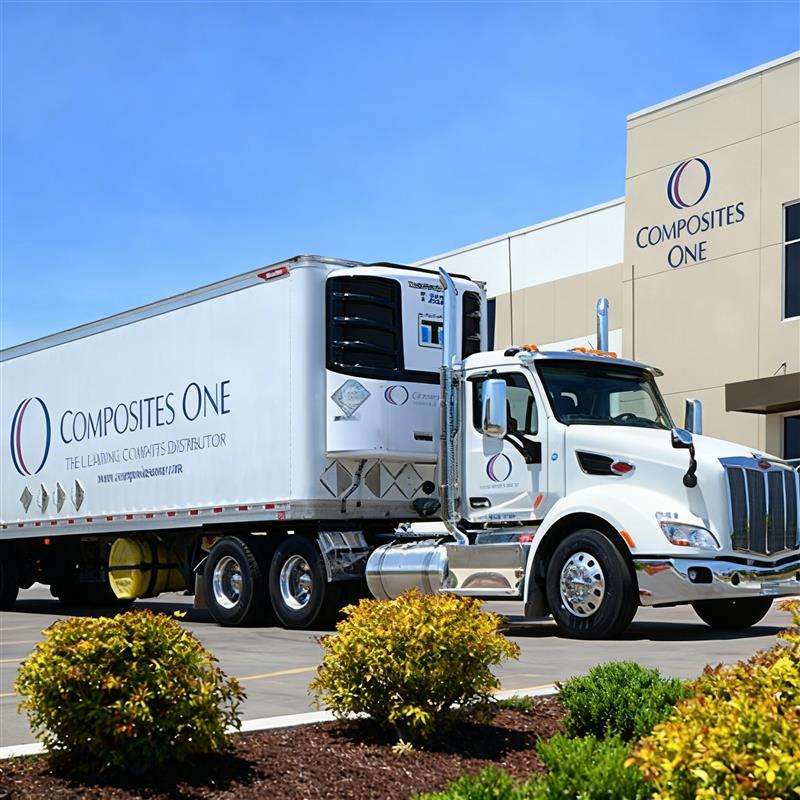
Composites One
The Challenge: Legacy Rigidity
Composites One had been operating on SAP Hybris for several years. While functional, the platform increasingly struggled to keep pace with the company’s operational demands and long-term growth objectives.
Key challenges included:
- Platform stability and performance issues as transaction volumes and catalog complexity increased
- Ongoing stabilization efforts following upgrades and customizations
- High dependency on specialized skills, increasing support costs and limiting agility
- Limited flexibility to evolve the storefront and customer experience without deep platform change
- Limited support for advanced B2B workflows such as role-based access, approval hierarchies, and assisted sales without heavy customization
- Lengthy release cycles that slowed response to business and customer needs
- Tight coupling between frontend, commerce logic, and backend systems, increasing risk with every change
In addition, supporting assisted sales use cases—where internal customer service representatives (CSRs) needed to act on behalf of customers to place orders, manage carts, and resolve issues—required increasing levels of customization and operational effort.
While these challenges did not halt operations, they introduced friction that limited agility, slowed innovation, and made future scaling more complex and costly.
The Decision: Strategic Platform Review and Rearchitecture
Rather than pursuing a like-for-like replacement, Composites One took a strategic approach to evaluating its future commerce architecture.
They engaged NVIZION to:
- Assess the current platform implementation and long-term viability
- Evaluate modern commerce platforms aligned to advanced B2B requirements
- Define a future-ready, decoupled architecture that reduced platform lock-in
NVIZION led a structured platform review focused on:
- Total cost of ownership
- Scalability and performance under complex B2B workload
- API maturity and ecosystem support
- Flexibility to support both self-service and assisted sales workflows
- Alignment with headless and composable architecture principles
Based on this evaluation, BigCommerce was selected as the core commerce engine, providing the B2B capabilities, performance, and extensibility Composites One required. Its API-first approach enabled a modern architecture that supported complex workflows—such as CSR impersonation—without recreating the tight coupling of the legacy platform.
The Solution: A Modern, Decoupled Commerce Architecture
NVIZION designed and implemented a modern, decoupled commerce architecture that clearly separated experience, business logic, and platform responsibilities—creating a more scalable, flexible foundation for long-term digital growth.
Architecture Overview
- Commerce Platform BigCommerce (core commerce and B2B capabilities
- Custom Middleware Layer Orchestration and integration with backend system
- Frontend Experience Next.js for performance, flexibility, and SEO
- Content Management Content stack for modular, headless content
- Cloud Infrastructure Google Cloud Platform (GCP
- Search Solr powering product discovery and catalog search
This architecture allowed Composites One to modernize its digital experience while maintaining control over backend systems and data flows.



Migration from SAP Hybris to BigCommerce
NVIZION supported Composites One through a carefully planned migration focused on simplification, accuracy, and long-term maintainability.
Key activities included:
- Detailed analysis of current platform customizations and data models
- Rationalization of legacy features to reduce unnecessary complexity
- Design of API-driven integration points between BigCommerce and Composites One’s middleware and backend systems
- Rebuilt core B2B commerce workflows using modern, API-driven patterns
- Implemented role-based access and permissions, ensuring users only see pricing, catalogs, and actions appropriate to their role within a customer organization
- Enabled order approval workflows, allowing junior buyers to place orders within defined thresholds while routing higher-value orders for senior approval
- Delivered CSR impersonation capabilities, enabling internal sales and support teams to securely act on behalf of customers to assist with ordering, issue resolution, and account management
- Led business requirements documentation and end-to-end website QA to validate functionality, content accuracy, and performance
- Implemented Solr-based search to improve relevance, speed, and catalog navigation
- Collaborated on go-live readiness, including cutover planning and risk mitigation
Rather than a phased or partial migration, the new BigCommerce storefront will fully replace the current site following a successful beta—ensuring a clean transition without fragmenting the customer experience.
Business Impact and Outcome
The new commerce platform delivered meaningful improvements across both business and technology dimensions:
- Improved platform stability with fewer post-release issues
- Faster release cycles and easier iteration
- Reduced dependency on niche platform skills
- Greater flexibility to evolve frontend experiences independently
- Strong support for complex B2B use cases, including assisted sales via CSR impersonation
- Improved search relevance and faster site performance
- Stronger governance and control for enterprise buyers through role-based access and approval workflows
Customer feedback during beta has been positive, particularly around search usability, site speed, and overall user experience.
Most importantly, Composites One now has a commerce foundation built to support growth and continuous innovation—rather than constrain it.
NVIZION’s Role
NVIZION acted as a strategic systems integrator, working closely with Composites One’s internal teams to help shape and deliver the transformation.
Our responsibilities included:
- Commerce platform assessment and selection guidance
- End-to-end commerce architecture design
- Migration strategy design
- BigCommerce implementation
- Headless frontend and Content stack CMS integration
- Implementation of Solr-based search
- Business requirements documentation and comprehensive QA execution
Composites One’s internal technology team designed and implemented backend data transformation and middleware services. NVIZION consumed these services to power the
commerce experience, ensuring clear ownership, strong collaboration, and seamless execution across teams.


Sales@nviz.com
Looking Ahead
With a modern, decoupled commerce platform in place, Composites One is well-positioned to continue evolving its digital capabilities—adding new features, optimizing assisted sales workflows, and integrating future systems without the constraints of a tightly coupled legacy platform.
This transformation highlights the value of thoughtful platform selection paired with strong architectural execution—and demonstrates how modern B2B commerce platforms like BigCommerce can support even the most complex enterprise use cases when implemented strategically.
.jpg)